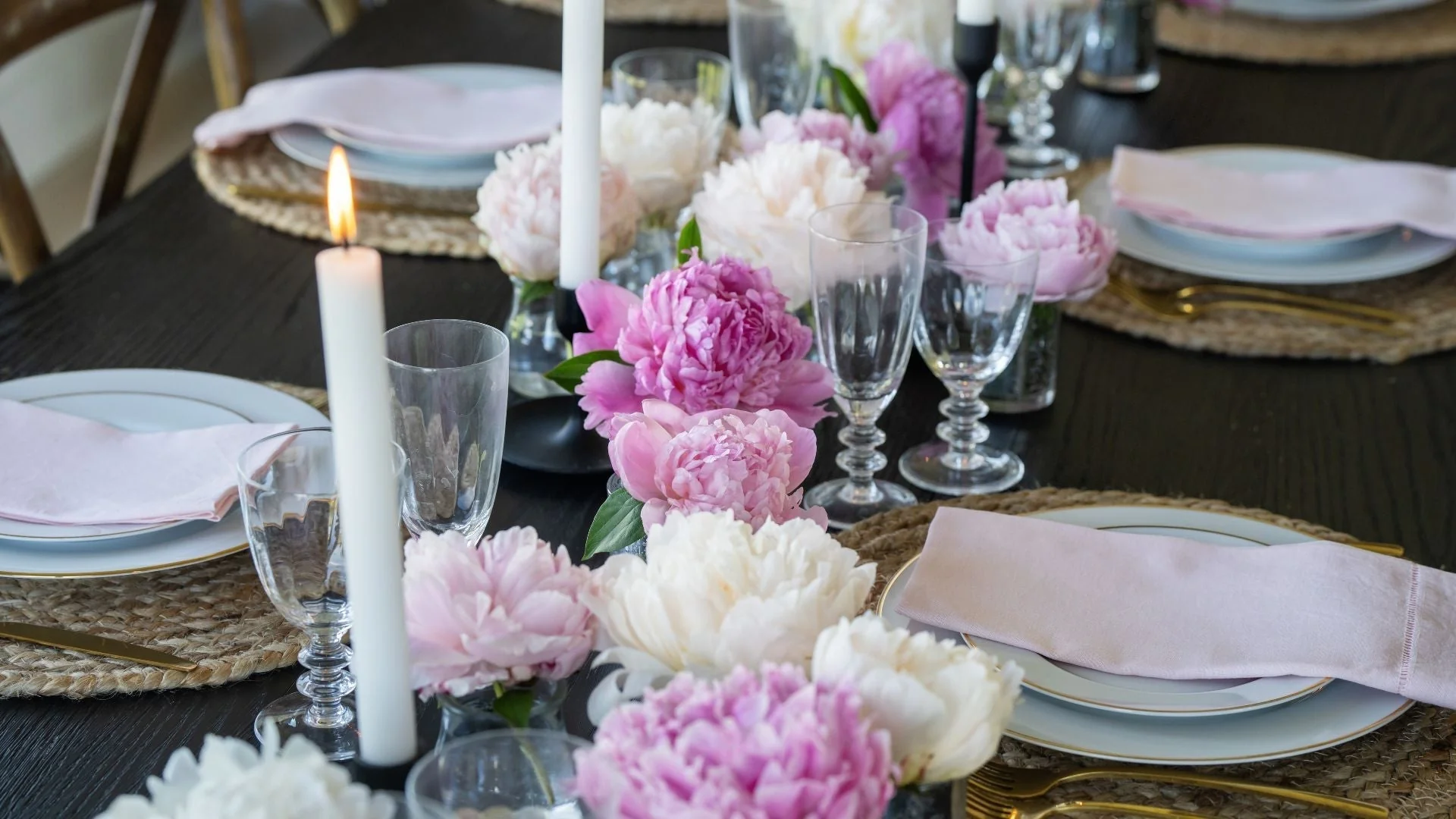
 Stocking a dining room sounds like something from a bygone department store registry, the kind of thing a stern aunt might discuss while wearing pearls. (First the kitchen, then the dining room.) But really, it is just the art of making meals easier, prettier, and slightly less chaotic. You are not building a formal dining room for royalty. You are giving yourself what you need to feed people well, whether that means lasagna for twelve or Thai food on actual plates because the delivery containers look sad.
Dinnerware
Good dinnerware sets should be handsome enough for guests and sturdy enough for scrambled eggs. For most homes, service for eight is a sensible starting point: dinner plates, smaller plates, and bowls. If you entertain often, or if your dishwasher is always full of coffee mugs and moral failure, go for twelve.
White plates are still the safest bet, not because they are dull, but because they know how to behave. Food looks good on them. Napkins look good next to them. They do not complain when you change the placemats. If plain white feels too hotel, look for a soft edge, a little texture, or a warmer ivory tone. The goal is not to buy plates with no personality. The goal is to buy plates that will not make you regret everything in six months.
Flatware
Stainless steel is the practical choice for most people. It holds up, it goes in the dishwasher, and it does not demand the sort of polishing schedule that requires either staff or a highly unusual personality. A basic five-piece place setting usually includes a dinner fork, salad fork, knife, soup spoon, and teaspoon. Eight settings will cover many homes, but twelve is better if you host holidays, birthdays, or the occasional dinner where someone brings an unexpected boyfriend.
And please buy serving utensils. A big spoon, a slotted spoon, a pie server, maybe a set of salad servers. Nobody wants to watch you serve green beans with a teaspoon while pretending this was always the plan.
Glassware
Most dining rooms can get by beautifully with everyday tumblers, taller water glasses, and one good all-purpose wine glass. That is enough for water, iced tea, wine, sparkling water, lemonade, and whatever drink your cousin is currently calling “clean.”
Clear glass is the most flexible. It works with casual dinners and dressed-up tables. Look for shapes that feel good in the hand and are not so delicate that washing them feels like defusing a bomb. If you like a stemmed wine glass, choose one with a bowl that can handle red or white. If your house is more relaxed, stemless glasses are fine, though they do make some wine people clutch their pearls. Let them clutch.
Placemats
For everyday use, choose something washable or wipeable. Cotton, woven vinyl, and indoor-outdoor fabrics all have their place. Anything that requires special treatment after one drop of salad dressing is not a placemat. It is a test.
You can go neutral here and let texture do the talking. Natural fibers, soft stripes, or a simple woven pattern can warm up the table without turning dinner into a theme party. Keep enough for the number of settings you actually use, plus a few extras. Placemats disappear in the laundry with the same confidence as socks.
Linen Napkins
Linen is lovely because it does not have to be perfect. In fact, it looks better when it gives up a little. Cotton is crisper and easier to manage. A blend is often the practical compromise. White napkins are classic, but darker shades are kinder if your table regularly involves red sauce, red wine, or children with mysterious hand residue.
Do not overthink the fold. You are not auditioning for a banquet hall. Fold the napkin into a rectangle and put it on the plate, under the fork, or beside the setting. That is enough. A napkin ring can be nice, but it is not a moral requirement.
Serving Pieces
Start with two platters, two serving bowls, one large salad bowl, and a few pieces for sauces, dips, or gravy. They do not all have to match. In fact, it is often better if they do not. A table looks more personal when it feels collected over time. Ceramic, glass, wood, and metal can all work together if the colors and shapes are not fighting for attention.
A water pitcher or carafe is another small luxury that earns its keep. So are trivets. Nobody remembers trivets until the casserole is in hand and the table is in danger.
The Point Is to Be Ready
Buy what you will use. Choose things that can survive your actual life. Let the table look cared for, not staged. The best dining rooms are not perfect. They are prepared. They have enough plates, enough forks, enough napkins, and just enough grace to make ordinary food feel like an occasion.